Florida Memory is administered by the Florida Department of State, Division of Library and Information Services, Bureau of Archives and Records Management. The digitized records on Florida Memory come from the collections of the State Archives of Florida and the special collections of the State Library of Florida.
In the United States and other Western nations, the decade following World War I earned the nickname the Roaring '20s. Though many were still dealing with the economic aftershocks of World War I, for some the 1920s was a period of economic prosperity, especially in major cities. From illegal bars called speakeasies to the growing demand for movies with sound or "talkies," the 1920s was a time of dramatic changes to fashion, culture and entertainment.
But historians acknowledge that the glitz and glamour were only one part of the story. The same decade that saw women begin joining the workforce saw the rise of the Ku Klux Klan. As cities in the U.S. grew and became more modern, the U.S. began closing itself off to the world. The Roaring '20s came to a dramatic end with the stock market crash of 1929, which launched the United States into the Great Depression.
The Great Depression was a worldwide economic crisis, but the United States had one of the highest unemployment rates in the Western world and found it harder to recover than some other nations. Many people lost their life savings when the banking system collapsed. Those who managed to keep their jobs found themselves making less money than before. The economic changes also brought political changes as Americans looked to the nation's leaders to pull the country out of the crisis.
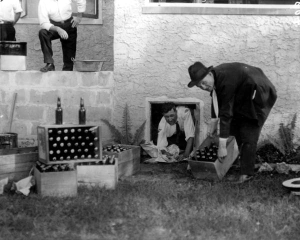
The Eighteenth Amendment was ratified on January 16, 1919, prohibiting the manufacture, sale and transportation of alcohol. It took effect a year later in 1920. Prohibition led to the rise of speakeasies, where people could drink together, and bootlegging, the illegal manufacture and sale of alcohol.
Analyze the influence that Hollywood, the Harlem Renaissance, the Fundamentalist movement, and prohibition had in changing American society in the 1920s.
02/14
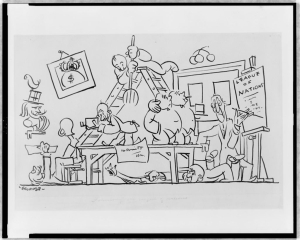
William Gropper, Forming the League of Nations, Library of Congress, Ben and Beatrice Goldstein Foundation Collection, 97518251.
January 16, 1920
The Council of the League of Nations Meets for the First Time
President Woodrow Wilson proposed the League of Nations at the end of World War I as a means of ensuring peace, though the United States never joined. It was a heavily debated issue between the presidential and Congressional powers. The League had their first meeting on January 16, 1920, and was replaced by the United Nations after World War II.
Examine the provisions of the Treaty of Versailles and the failure of the United States to support the League of Nations.
Examples may include, but are not limited to, self-determination, boundaries, demilitarized zone, sanctions reparations, and the League of Nations (including Article X of the Covenant).
Describe efforts by the United States and other world powers to avoid future wars.
Examples may include, but are not limited to, League of Nations, Washington Naval Conference, London Conference, Kellogg-Briand Pact, the Nobel Prize.
02/14
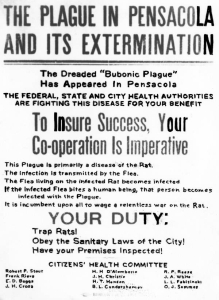
Advertisement About the Dreaded "Bubonic Plague" and the Need for Rat Control in Pensacola, Florida., circa 1920, Florida Memory, State Board of Health Collection, Series 917, SBH0376.
1920
Bubonic Plague Breaks Out in Pensacola
In June 1920, a doctor in Pensacola, Florida, discovered one of his patients was infected with the bubonic plague, and the disease was spreading. Florida's State Board of Health and the U.S. Public Health Service quickly identified and isolated 10 infected patients, and they eradicated all the rodents responsible for spreading the disease.
Summarize challenges Floridians faced during the Great Depression.
Examples may include, but are not limited to, the Labor Day hurricane of 1935 and the Mediterranean fruit fly.
02/14
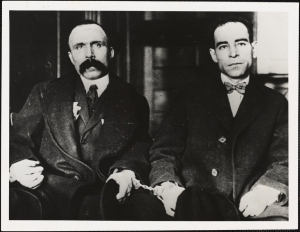
Nicola Sacco and Bartolomeo Vanzetti, Dedham, Mass., 1923, Digital Commonwealth, Boston Public Library, Aldino Felicani Sacco-Vanzetti Collection, 1915-1977, 5Q47SW13D.
July 14, 1921
Jury Convicts Sacco and Vanzetti of Murder
On July 14, 1921, a jury convicted Nicola Sacco and Bartolomeo Vanzetti of murder, and the judge sentenced them to death. Protestors around the world argued Sacco and Vanzetti were not treated fairly because they were Italian immigrants and because of their political beliefs.
Learn More
"Sacco and Vanzetti, 1921," The Gilder Lehrman Institute of American History, accessed November 3, 2025, https://www.gilderlehrman.org/history-resources/spotlight-primary-source/sacco-and-vanzetti-1921.
Explain the causes of the public reaction (Sacco and Vanzetti, labor, racial unrest) associated with the Red Scare.
Examples may also include, but are not limited to, Palmer Raids, FBI, J. Edgar Hoover.
02/14
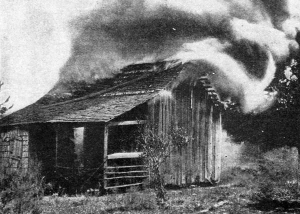
Deliberate Burning of an African American Home - Rosewood, Florida, 4 January 1923, Florida Memory, Reference Collection, RC12409.
1923
Rosewood Massacre
During the first week of January 1923, a white mob destroyed the town of Rosewood, Florida. Black residents hid in the woods or fled to other towns. Although some fought back, the town was ultimately abandoned.
Learn More
"Rosewood," Division of Library and Information Services, Florida Department of State, n.d.
Examine key events and people in Florida history as they relate to United States history.
Examples may include, but are not limited to, Rosewood, land boom, speculation, impact of climate and natural disasters on the end of the land boom, invention of modern air conditioning in 1929, Alfred DuPont, Marjorie Kinnan Rawlings, Zora Neale Hurston, James Weldon Johnson.
Describe the emergence, growth, destruction and rebuilding of black communities during Reconstruction and beyond.
Clarification 1: Instruction includes the ramifications of prejudice, racism and stereotyping on individual freedoms (e.g., the Civil Rights Cases, Black Codes, Jim Crow Laws, lynchings, Columbian Exposition of 1893).
Clarification 2: Instruction includes acts of violence perpetrated against and by African Americans but is not limited to 1906 Atlanta Race Riot, 1919 Washington, D.C. Race Riot, 1920 Ocoee Massacre, 1921 Tulsa Massacre and the 1923 Rosewood Massacre.
Clarification 3: Instruction includes communities such as: Lincolnville (FL), Tullahassee (OK), Eatonville (FL).
05/24
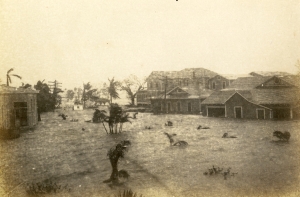
Everglades City During the 1926 Hurricane, 1926, Florida Memory, Koreshan Unity Collection, KOR0318.
September 18, 1926
Great Miami Hurricane
A catastrophic hurricane made landfall near Miami Beach in the early morning hours of September 18, 1926. Known as the "Great Miami Hurricane," the storm cut a path of destruction across Southern Florida.
Examine key events and people in Florida history as they relate to United States history.
Examples may include, but are not limited to, Rosewood, land boom, speculation, impact of climate and natural disasters on the end of the land boom, invention of modern air conditioning in 1929, Alfred DuPont, Marjorie Kinnan Rawlings, Zora Neale Hurston, James Weldon Johnson.
02/14
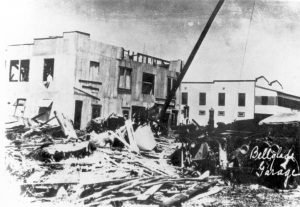
Automotive Garage, Demolished by the Hurricane of 1928 - Belle Glade, Florida, 1928, Florida Memory, Reference Collection, RC10673.
September 17, 1928
Okeechobee Hurricane
The Okeechobee Hurricane, also known as the San Felipe Segundo Hurricane, made landfall in Florida near West Palm Beach on September 17, 1928. It remains one of the deadliest hurricanes to strike the United States, leading to the deaths of roughly 2,500 people, mostly in Florida.
Examine key events and people in Florida history as they relate to United States history.
Examples may include, but are not limited to, Rosewood, land boom, speculation, impact of climate and natural disasters on the end of the land boom, invention of modern air conditioning in 1929, Alfred DuPont, Marjorie Kinnan Rawlings, Zora Neale Hurston, James Weldon Johnson.
02/14
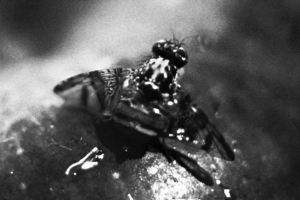
Mediterranean Fruit-fly, Florida Memory, General Collection, N028958.
1929
Medfly Invades Florida Citrus Industry
When the Mediterranean fruit fly (or medfly) invaded Florida in 1929, the state's citrus industry was devastated. Citrus production dropped by about 60%. This put more stress on Florida's economy, which was already declining from the end of the land boom.
Examine key events and people in Florida history as they relate to United States history.
Examples may include, but are not limited to, Rosewood, land boom, speculation, impact of climate and natural disasters on the end of the land boom, invention of modern air conditioning in 1929, Alfred DuPont, Marjorie Kinnan Rawlings, Zora Neale Hurston, James Weldon Johnson.
02/14
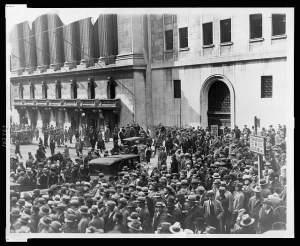
[Crowd of People Gather Outside the New York Stock Exchange Following the Crash of 1929], 1929, Library of Congress, New York World-Telegram and the Sun Newspaper Photograph Collection, 99471695.
October 29, 1929
Black Tuesday or the Wall Street Crash
On Tuesday, October 29, 1929, the Dow Jones Industrial Average fell more than 30 points and investors sold over 16 million shares. Many Americans lost their life savings as banks across the country failed. The Wall Street crash not only devastated the U.S. economy but also the global economy, starting a worldwide Great Depression.
Examine causes, course, and consequences of the Great Depression and the New Deal.
02/14
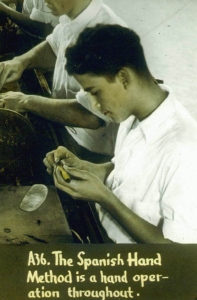
Tampa's Tobacco Industry, 1920 (circa), Florida Memory, General Collection, HR024.
November 26, 1931
Ybor Cigar Makers' Strike Begins
On November 26, 1931, cigar makers in Ybor City, Florida, went on strike in response to poor treatment and the factory owners' decision to ban lectors. A lector (or reader) was a factory worker who read aloud to the other workers throughout the day to keep everyone entertained.
Examine key events and peoples in Florida history as they relate to United States history.
Examples may include, but are not limited to, the Spanish-American War, Ybor City, Jose Marti.
02/14
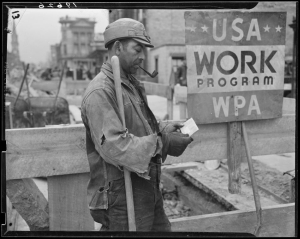
Photograph of Works Progress Administration Worker Receiving Paycheck, January 1939, National Archives at College Park, 594956.
May 6, 1935
Executive Order 7034 Creates the Works Progress Administration
On May 6, 1935, President Franklin D. Roosevelt issued Executive Order 7034, which created the Works Progress Administration (WPA). The WPA was a federal relief agency that created millions of jobs. WPA projects included roadbuilding and the construction of parks, libraries, schools, hospitals and other public buildings.
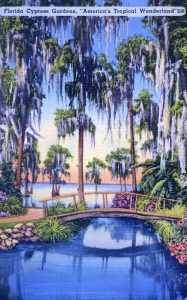
Julia and Dick Pope Sr. opened Cypress Gardens on January 2, 1936. In the beginning, the main feature was the beautiful gardens, but over time the park added water ski shows, boat rides and women dressed as Southern Belles to its list of attractions. By 1963, Cypress Gardens was the most popular tourist destination in Florida and one of the top tourist destinations in the country.
Describe the economic development of Florida's major industries.
Examples of industries may include, but are not limited to, timber, citrus, cattle, tourism, phosphate, cigar, railroads, bridges, air conditioning, sponge, shrimping, and wrecking (pirating).
These primary source sets contain documents and photos arranged by topic that teachers can use in their lesson plans. Each set is accompanied by a teacher's guide containing historical context, teaching suggestions, and relevant NGSSS and Florida Standards.

 Listen: The World Program